 Merken
 One afternoon, I was searching for something that felt substantial but wouldn't leave me sluggish afterward, and that's when shirataki noodles clicked for me. My friend swore by them in broth, and after my first bowl—watching the delicate strands curl in that golden, aromatic liquid—I understood why. There's something almost meditative about how quickly this comes together, yet it tastes like you've been tending a pot all day.
I made this for my neighbor who'd just started exploring low-carb eating and was nervous about missing noodles. When she came over and smelled that ginger and sesame-infused broth simmering away, her shoulders relaxed. She finished the whole bowl and asked for the recipe before she'd even stood up from the table—that's when I knew this dish had real staying power.
Ingredients
- High-quality bone broth (beef or chicken), 4 cups: This is your foundation—it needs depth and richness because everything else is delicate and subtle, so don't skimp on the broth quality.
- Fresh ginger, 1 thumb-sized piece, sliced: The ginger mellows and perfumes the entire bowl; slicing it means the broth absorbs its warmth without overwhelming.
- Garlic, 2 cloves, smashed: Smashing releases the oils immediately, letting the flavor infuse rather than sitting idle.
- Soy sauce or tamari, 2 tablespoons: Use tamari if you're gluten-free and this becomes your umami anchor that makes everything taste intentional.
- Rice vinegar, 1 tablespoon: This bright note cuts through the richness and keeps the broth from feeling heavy or one-dimensional.
- Sesame oil, 1 teaspoon: A small amount goes far—toasted sesame oil adds nuttiness that makes people think you've spent hours cooking.
- Shirataki noodles, 400 g, drained and rinsed: These require a little finesse but repay you by being virtually calorie-free and satisfying in texture.
- Soft-boiled eggs, 2, halved (optional): The warm yolk mingles with the broth and adds protein that keeps you full for hours.
- Spring onion, 1 small, thinly sliced: Fresh, crisp, and herbaceous—it's the thing that wakes up your palate with each spoonful.
- Red chili, 1 small, thinly sliced (optional): Just enough heat to make you notice, not enough to overwhelm the delicate broth.
- Fresh coriander or parsley, chopped: Choose one or both depending on your mood; coriander adds an almost citrus quality while parsley stays clean and fresh.
- Toasted sesame seeds: They add a gentle crunch and visual appeal that signals this is something you cared about.
Tired of Takeout? 🥡
Get 10 meals you can make faster than delivery arrives. Seriously.
One email. No spam. Unsubscribe anytime.
Instructions
- Build your broth base:
- Combine bone broth, ginger slices, smashed garlic, soy sauce, rice vinegar, and sesame oil in a medium pot. Bring to a gentle boil over medium heat—you want to see small bubbles breaking the surface, not a rolling boil that will scatter the aromatics.
- Let flavors marry:
- Reduce heat and simmer for 10 minutes; this is when the ginger softens and the garlic becomes mellow, and the broth transforms from simple to something that smells like a quiet restaurant in the best way. Resist the urge to rush this step.
- Prepare the noodles properly:
- While the broth simmers, drain shirataki noodles and rinse thoroughly under cold water—this removes the packing liquid and any odor. Place them in a sieve and pour boiling water over them once more; this step is crucial and worth the extra minute.
- Warm the noodles in broth:
- Add the prepared noodles to the simmering broth and let them heat through for 2 to 3 minutes. They'll soften slightly and absorb the flavor without breaking apart.
- Strain out the solids:
- Remove ginger and garlic slices from the broth using a small spoon or ladle; leaving them in will make the broth taste bitter as it sits.
- Divide and serve:
- Ladle noodles and broth evenly into two bowls, making sure each gets a fair share of the fragrant liquid.
- Add your toppings:
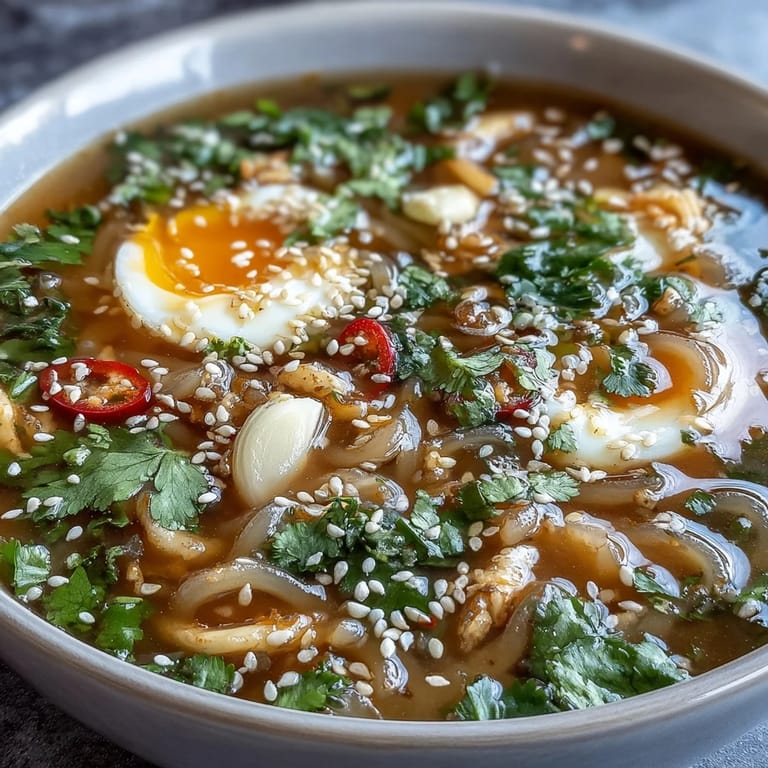
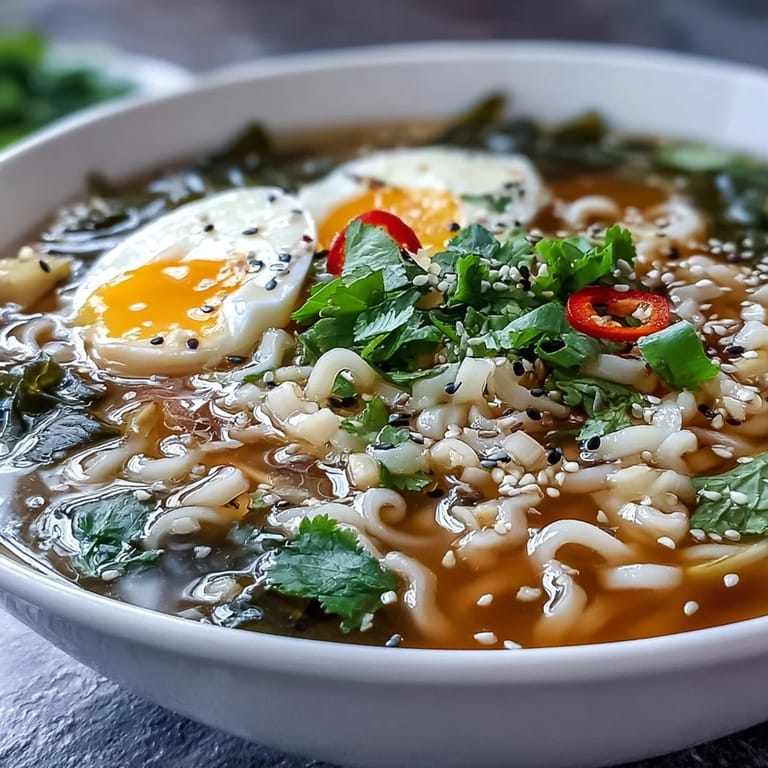
- Top each bowl with soft-boiled egg halves, spring onion, chili, fresh herbs, and sesame seeds in whatever combination feels right. The beauty is that everyone can customize their own experience.
 Merken
 There's a quiet moment in making this dish where you're standing at the stove, letting the broth simmer, and the kitchen fills with this comforting haze of ginger and sesame. I've started making this on evenings when I need to slow down, not because it takes long, but because every step invites you to pay attention.
The Truth About Shirataki Noodles
Shirataki noodles intimidated me at first—they looked so different from what I'd eaten for years, and I was skeptical that they'd actually satisfy. But the first time I tasted them properly prepared in a flavorful broth, I realized they're not trying to be regular pasta. They have their own gentle texture, almost bouncy, and they absorb whatever broth they're sitting in like little flavor sponges.
Making Bone Broth Your Secret Weapon
A good bone broth does the heavy lifting here, so choosing one you actually like is non-negotiable. I've found that homemade is incredible if you have the time, but there are excellent store-bought options now—just read the ingredient list and skip anything with added sugar or suspicious fillers. The broth becomes your palette, and every other ingredient is just accentuating what it already knows how to do.
Customizing Without Losing the Plot
The magic of this recipe is that it welcomes your preferences while staying true to its essence. Some days I add shredded rotisserie chicken for extra protein, other times I throw in some sautéed mushrooms or bok choy. A vegetarian version is just as valid—use vegetable broth and top with crispy tofu instead of eggs, and you'll have something just as warming and complete.
- Add cooked chicken, tofu, or mushrooms without changing the balance of the dish.
- Swap soy sauce for tamari, coconut aminos, or even a splash of miso if you need it soy-free.
- Use whatever fresh herbs you have on hand; this is your bowl, and it should make you happy.
 Merken
 This bowl has become my answer to the question of what to cook when I want something nourishing without any of the heaviness. It's the kind of meal that makes you feel taken care of, even if you're cooking it for yourself.
Fragen & Antworten zum Rezept
- → Wie entferne ich den Eigengeruch von Shirataki-Nudeln?
Spülen Sie die Nudeln unter kaltem Wasser gründlich ab und geben Sie sie in ein Sieb. Übergießen Sie sie mit kochendem Wasser, bevor Sie sie in die Brühe geben. Das neutralisiert den Geruch effektiv.
- → Kann ich dieses Gericht vegetarisch zubereiten?
Ja, ersetzen Sie die Knochenbrühe durch eine kräftige Gemüsebrühe und verzichten Sie auf Eier oder verwenden Sie Tofu als proteinreiche Alternative. Der Geschmack bleibt dennoch intensiv.
- → Wie lange halten sich Shirataki-Nudeln?
Ungeöffnet sind sie bei kühliger Lagerung mehrere Monate haltbar. Nach dem Öffnen sollten sie innerhalb von 2-3 Tagen verbraucht und im Kühlschrank aufbewahrt werden.
- → Welche Alternativen zu Sojasauce gibt es?
Für eine sojafreie Variante verwenden Sie Kokosaminos. Diese bieten eine ähnliche salzige Umami-Note und sind zudem histaminarm. Die Menge bleibt gleich.
- → Kann ich die Brühe im Voraus zubereiten?
Absolut. Die Basis-Brühe lässt sich bis zu 3 Tage im Kühlschrank aufbewahren. Erhitzen Sie sie vor dem Servieren erneut und geben Sie die frischen Shirataki-Nudeln erst kurz vor dem Anrichten hinzu.
- → Eignet sich dieses Gericht für Meal Prep?
Die Brühe lässt sich hervorragend vorkochen. Die Nudeln sollten jedoch erst vor dem Servieren hinzugefügt werden, da sie sonst ihre Textur verlieren und zu weich werden.