 Merken
 There's something about assembling a breakfast bowl that feels like creating art on a plate—the kind of morning where you're actually awake enough to appreciate it. I discovered this combination on a quiet Tuesday when I had leftover jasmine rice and suddenly wanted eggs that weren't just scrambled into oblivion. The tofu was supposed to be dinner, but it found its way into breakfast instead, and somehow that happy accident became the bowl I keep making every few days now.
My roommate walked in while I was arranging the components and said it looked too pretty to eat, then immediately sat down and finished hers in about four minutes. That's when I knew this wasn't just a random breakfast experiment—it was the kind of dish that bridges that gap between nourishing yourself and actually enjoying it.
Ingredients
- Firm tofu, pressed and cubed (200 g): Pressing it matters more than you'd think—it removes the excess water that keeps the tofu from getting crispy and golden, which is where the real flavor happens.
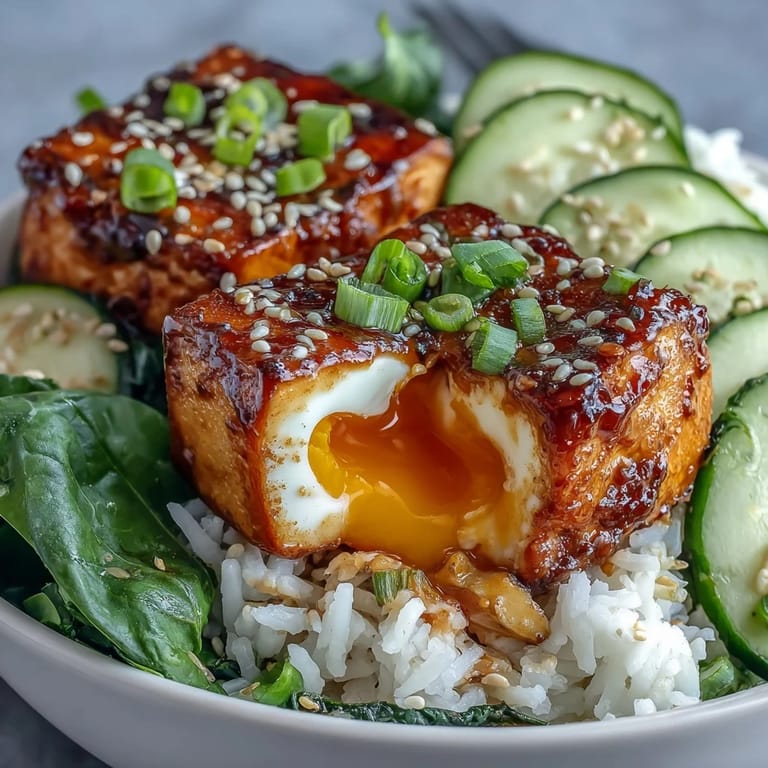
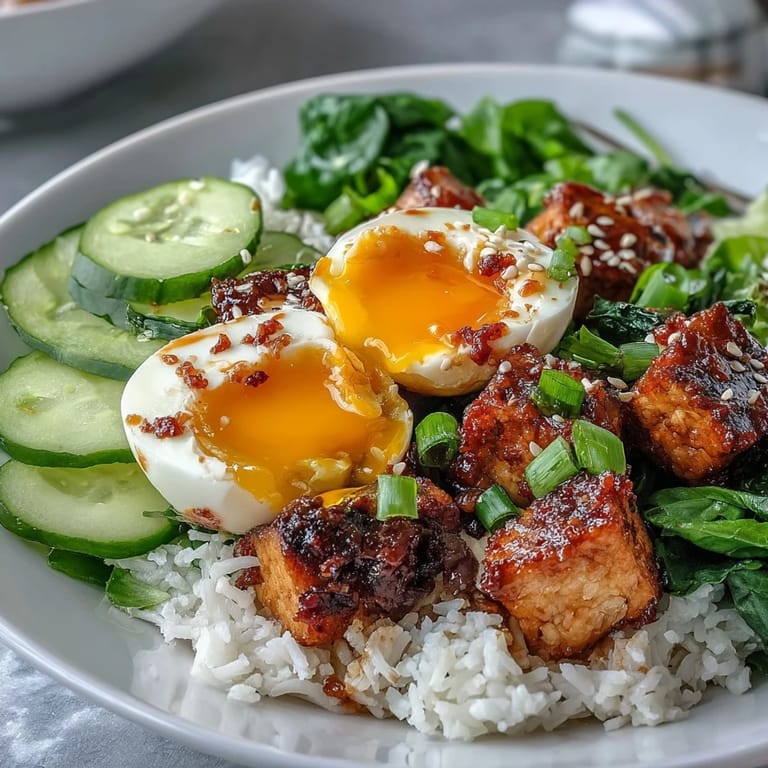
- Large eggs (2): The 6½-to-7-minute window is oddly precise, but that's exactly what gives you that jammy yolk that breaks into a silky sauce across everything.
- Soy sauce (1 tbsp for tofu, 2 tbsp for sauce): I use regular soy sauce, but tamari works beautifully if you're avoiding gluten.
- Sesame oil (1 tsp for tofu, 1 tbsp for sauce): Toast-colored sesame oil tastes different than the lighter kind—it adds a nuttiness that transforms the whole bowl.
- Jasmine or short-grain rice (1 cup cooked, warm): Warm rice is non-negotiable here because it actually absorbs the sauce instead of just sitting there.
- Baby spinach or mixed greens (1 cup): Fresh greens contrast beautifully with the warm components, and they slightly soften from the heat without turning mushy.
- Cucumber and carrot (1 small each, prepared fresh): The crispness of raw vegetables is what makes each bite interesting—don't skip this or the texture becomes one-note.
- Fresh ginger, finely grated (1 tbsp): Micro-grating ginger rather than mincing it releases more juice and distributes the flavor more evenly throughout the sauce.
- Scallions, finely sliced (2): Use the white and light green parts raw for the sauce—they're sharper that way.
- Rice vinegar (1 tbsp): This keeps the sauce bright instead of letting the soy and sesame oil dominate.
- Honey or maple syrup (1 tsp): Just a touch rounds out the flavors and balances the heat from the ginger.
- Chili flakes (½ tsp, optional): I add these most mornings because that tiny warmth lifts everything else.
- Toasted sesame seeds and cilantro for garnish: These final touches aren't decorative—they add textural contrast and a fresh flavor burst that makes you taste each component separately.
Tired of Takeout? 🥡
Get 10 meals you can make faster than delivery arrives. Seriously.
One email. No spam. Unsubscribe anytime.
Instructions
- Soft-boil your eggs with intention:
- Bring water to a rolling boil, then gently lower the eggs in—the boiling water should cover them by about an inch. Start your timer the moment they hit the water. Exactly 6½ to 7 minutes gives you that runny center you're after; any longer and you've got hard-boiled instead.
- Press and cube the tofu:
- Wrap your block of tofu in a clean kitchen towel and let something heavy sit on it for a few minutes while you prep everything else. The drier it gets, the better it crisps in the pan.
- Season the tofu cubes:
- Toss them in a bowl with soy sauce, sesame oil, black pepper, and garlic powder—this is your chance to build flavor before they even hit the heat. Let them sit while you work on the eggs if you can; they'll start absorbing the seasonings.
- Sauté the tofu until golden:
- Medium heat in a non-stick skillet lets you get that crispy exterior without burning the outside while the inside stays cool. Stir occasionally and give them about 6 to 8 minutes total; you'll know they're done when they're golden brown on multiple sides.
- Whisk together the sauce:
- Combine scallions, ginger, soy sauce, rice vinegar, sesame oil, honey, and chili flakes in a small bowl—this happens while the tofu cooks, so you're not waiting around at the end. The fresh ginger should be almost juicy from how finely you grated it.
- Build your bowls with intention:
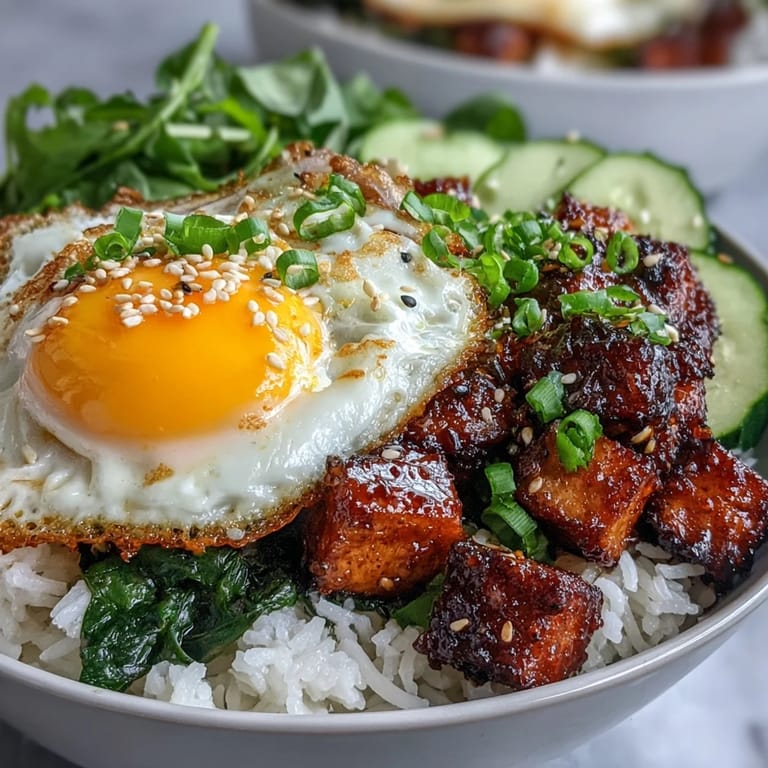
- Divide the warm rice first, then layer greens, cucumber, and carrot on top—they'll nestle in and warm slightly from the rice underneath. Add your golden tofu cubes and halved jammy eggs, yolk-side up if you're feeling fancy.
- Finish with sauce and garnish:
- Drizzle the ginger scallion sauce everywhere—don't be shy about it. Scatter sesame seeds and cilantro across the top, and the bowl is ready to eat while everything is still at its perfect temperature.
 Merken
 My partner tried this once and suddenly started making it on Saturday mornings without me, which felt like the ultimate compliment. There's something about having all these different elements come together in one bowl that makes breakfast feel less like just eating and more like actually taking care of yourself.
Why the Jammy Egg Changes Everything
A jammy egg isn't just cooked differently—it becomes a sauce. The moment you press your spoon into that yolk, it spreads across the rice and tofu like a silky binding agent that makes every bite taste connected instead of like separate components. I used to hard-boil eggs and wonder why breakfast bowls felt slightly dry; switching to jammy eggs was the shift that made this dish actually crave-worthy.
The Ginger Scallion Sauce as the Soul of the Bowl
This sauce bridges everything—without it, you have a nice arrangement of food, but with it, you have a dish that tastes intentional. The brightness of the vinegar, the warmth of fresh ginger, the toastiness of sesame oil, and that small hit of honey create a flavor profile that makes you want to keep eating even though you're already satisfied. I've tried bottled sauces, and they never capture this balance.
Making It Your Own Across Seasons
Winter is when I'm most likely to add a handful of sautéed mushrooms alongside the tofu for extra earthiness, while summer calls for more greens and maybe some avocado. Spring brings fresh herbs I can't resist, and fall is when I sometimes swap the jasmine rice for something warmer like farro. This bowl has this magical flexibility where the core stays recognizable, but you can adjust it without losing what makes it special.
- If you can't find good cilantro, microgreens or fresh mint work beautifully—it's just about that fresh element at the end.
- Marinate the tofu for 15 minutes before cooking if you have the time; it deepens the flavor considerably.
- Brown rice, quinoa, or even farro can replace the jasmine rice if you want something heartier.
 Merken
 This bowl proves that breakfast doesn't have to choose between being delicious and being good for you—it can absolutely be both. Make it once and you'll understand why I keep coming back to it.
Fragen & Antworten zum Rezept
- → Wie bereite ich perfekte weichgekochte Eier zu?
Bringen Sie einen Topf mit Wasser zum Kochen. Geben Sie die Eier vorsichtig hinein und kochen Sie sie 6½ bis 7 Minuten. Übertragen Sie die Eier sofort in ein Eiswasserbad, um den Garprozess zu stoppen, und schälen Sie sie vorsichtig.
- → Kann ich die Frühstücks-Schale vegan zubereiten?
Ja, ersetzen Sie einfach die Eier durch Avocado oder geröstete Champignons. Verwenden Sie anstelle von Honig Ahornsirup in der Sauce. Alle anderen Zutaten sind bereits pflanzlich.
- → Wie lange hält sich die Frühlingszwiebel-Ingwer-Sauce?
Die Sauce hält sich in einem verschlossenen Behälter im Kühlschrank bis zu einer Woche. Die Aromen entwickeln sich noch weiter, wenn sie einige Zeit ziehen können.
- → Welche Reis-Sorten eignen sich am besten?
Jasmin- oder Kurzkornreis passen hervorragend zu diesem Gericht. Alternativ können Sie Braunreis oder Quinoa für mehr Ballaststoffe verwenden.
- → Wie mache ich den Tofu besonders krosch?
Drücken Sie den Tofu vor dem Marinieren gründlich aus, um überschüssige Feuchtigkeit zu entfernen. Braten Sie die Würzel in einer heißen Pfanne ohne zu viel Fett, bis sie goldbraun und knusprig sind.
- → Kann ich die Zutaten vorbereiten?
Ja, Sie können den Reis vorkochen, das Gemüse vorbereiten und die Sauce im Voraus zubereiten. Braten Sie den Tofu kurz vor dem Servieren an, damit er krosch bleibt.