 Merken
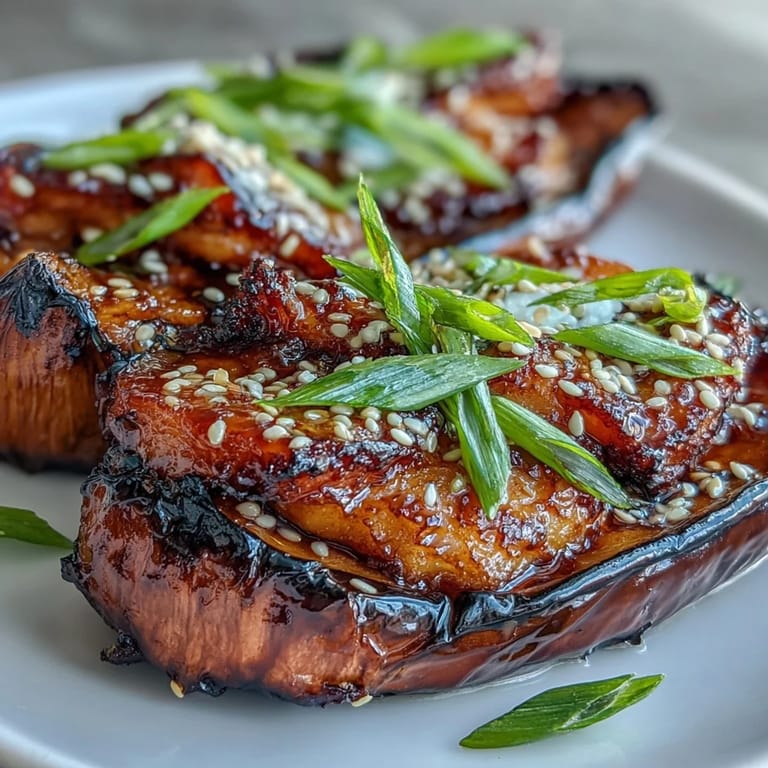
 My neighbor brought over a container of miso-glazed eggplant one autumn evening, still warm from her kitchen, and I was absolutely won over by how the glaze turned silky and caramelized under the broiler. The eggplant itself had this tender, almost buttery quality that I didn't know was possible without deep-frying. I asked for the technique immediately, and she laughed, saying it was embarrassingly simple once you understood the three-step process. Now whenever I make it, I find myself standing in front of the broiler watching the glaze bubble, utterly mesmerized by the transformation. It's become my go-to vegetable side when I want something that tastes like it took way more effort than it actually did.
I made this for a small dinner party last spring and watched my friend who claims to dislike eggplant eat two halves without even hesitating. She kept reaching for more, saying she'd never realized eggplant could taste like this—rich and almost meaty in the way miso makes everything taste more like itself. That moment shifted something in how I thought about cooking vegetables, how a single technique and one good glaze can completely reframe what someone thinks they like or dislike.
Ingredients
- Japanese Eggplants (2 medium): Japanese varieties are smaller and thinner-skinned than globe eggplants, which means they cook faster and have fewer bitter seeds, making them ideal for this preparation.
- White Miso Paste (3 tbsp): This is where the umami backbone lives; white miso is milder and slightly sweet compared to red varieties, giving you that perfect balance without overwhelming funkiness.
- Mirin (1 tbsp): This sweet rice wine adds a subtle gloss and helps the glaze caramelize beautifully under the broiler—don't skip it or use honey as a substitute in the initial mixing, as the texture changes.
- Sake (1 tbsp): A small amount cuts through the sweetness and adds a wispy complexity that makes people wonder what they're tasting; it cooks off completely, so no alcohol remains.
- Sugar (1 tbsp): This helps the glaze bubble and brown rather than just sit on the eggplant; it's your caramelization helper.
- Sesame Oil (1 tbsp): Use toasted sesame oil for deeper flavor, though regular sesame oil works if that's what you have; this adds that warm, nutty note that ties everything together.
- Toasted Sesame Seeds (1 tbsp for garnish): Toast them yourself if you can—the difference between pre-toasted and freshly toasted is the difference between good and unforgettable.
- Green Onions (2 for garnish): Slice these thin and scatter them right before serving so they stay bright and fresh, adding a sharp contrast to the sweet-savory glaze.
Tired of Takeout? 🥡
Get 10 meals you can make faster than delivery arrives. Seriously.
One email. No spam. Unsubscribe anytime.
Instructions
- Set Your Oven and Prep:
- Preheat to 400°F (200°C) and line your baking sheet with parchment paper—this prevents sticking and makes cleanup infinitely easier. While it heats, slice your eggplants in half lengthwise and use a sharp knife to score the flesh in a crosshatch pattern, going deep but not piercing the skin.
- Oil and Roast:
- Brush the cut sides lightly with sesame oil and lay them cut-side up on your prepared sheet, then roast for 20 to 25 minutes until the flesh is completely tender and golden at the edges. You'll know it's ready when a fork slides through with almost no resistance.
- Make the Glaze:
- While the eggplant roasts, whisk together miso paste, mirin, sake, sugar, and the remaining sesame oil in a small bowl until completely smooth—no lumps of miso floating around. Taste it and let yourself be surprised by how balanced it already tastes on a spoon.
- Glaze and Broil:
- Remove the eggplants from the oven and spread a generous layer of miso glaze evenly across each cut side, then switch your oven to broil and return them to the heat for 2 to 3 minutes, watching constantly as the glaze bubbles and turns golden-brown and slightly darkened at the edges. Don't walk away—this is the critical moment where you're building flavor, not burning it.
- Finish and Serve:
- Pull them out when the glaze is bubbly and caramelized, then sprinkle with sesame seeds and green onions while still warm, serving immediately so nothing loses its heat or texture.
 Merken
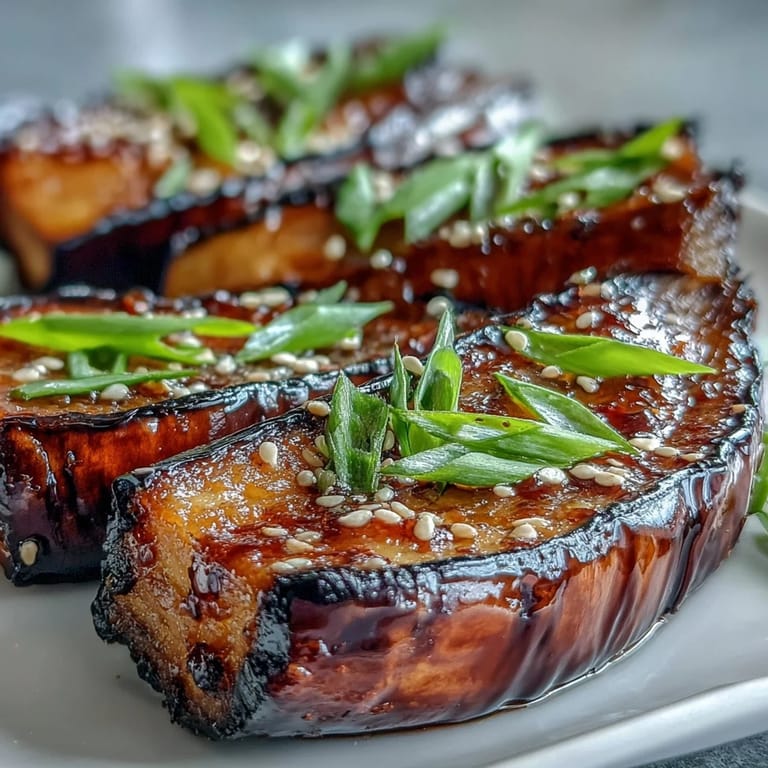
 There's something almost meditative about standing in front of the broiler watching the glaze transform, the kitchen filling with the smell of caramelizing miso and sesame. In that brief, focused moment, you're not just cooking—you're witnessing chemistry happen in real time, and somehow that makes the dish taste even better when you finally sit down to eat it.
How to Choose Your Eggplants
Look for eggplants that feel heavy for their size and have skin that's glossy and unblemished, not wrinkled or soft. Japanese varieties should be slender and about 8 inches long; if you can't find them, you can use smaller globe eggplants or even long Italian eggplants, though you might need to adjust cooking time slightly depending on thickness. The fresher your eggplant, the less watery and bitter it tends to be, so buy them close to cooking if possible.
Miso Paste: Finding the Right One
White miso is essential here—it's fermented for a shorter time than red or dark miso, giving it that creamy sweetness that complements eggplant beautifully. You'll find it in the Asian section of most grocery stores or any Japanese market, usually in plastic tubs or pouches. Once opened, keep it in your refrigerator where it lasts for months, and don't be shy about using it in dressings, soups, and glazes beyond this recipe.
Variations and Serving Ideas
This dish is naturally vegetarian and vegan (as long as you use vegan miso), making it perfect for mixed tables where people eat differently. Serve it alongside steamed rice and a crisp green salad for a light meal, or position it as part of a larger Japanese-inspired spread with miso soup, pickled vegetables, and grilled fish. You can also substitute honey or maple syrup for the sugar if you want a different sweetness profile, though the caramelization might be slightly less dramatic.
- Make it a full meal by serving with jasmine rice and a simple cucumber salad dressed in rice vinegar and sesame oil.
- Leftovers taste great cold or at room temperature, perfect for next-day bento boxes or lunch bowls.
- For a fancy touch, serve on individual plates and drizzle any extra glaze that pools on the baking sheet around the eggplant like a sauce.
 Merken
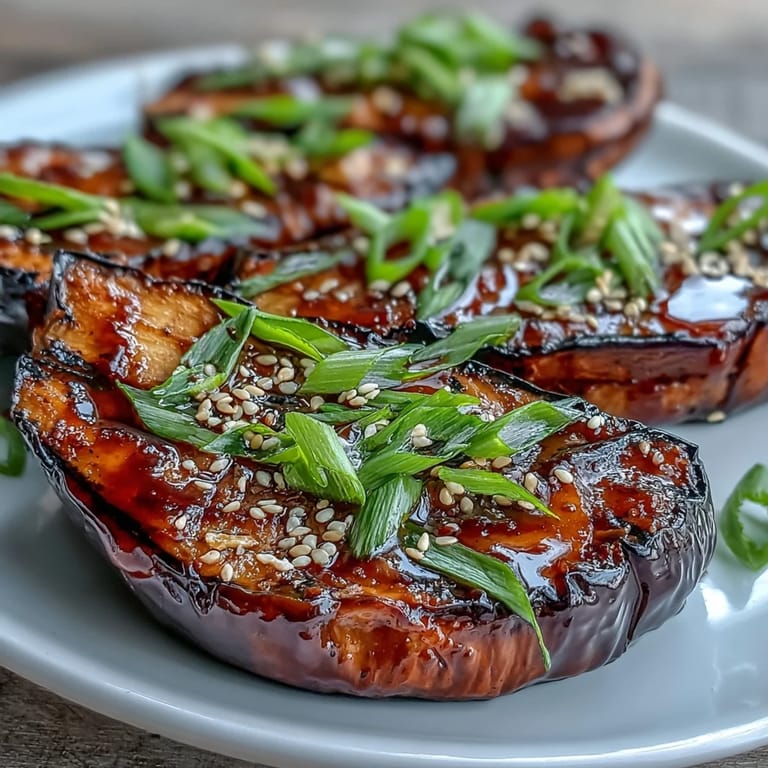
 This recipe proved to me that the best side dishes are often the simplest ones, where a few quality ingredients do all the talking. Keep making this, and eventually someone will ask you for the secret, and you'll get to share the quiet pleasure of watching their face when they realize there is none—just technique and patience.
Fragen & Antworten zum Rezept
- → Kann ich normales Miso anstelle von weißem Miso verwenden?
Ja, Sie können rotes Miso verwenden, beachten Sie jedoch, dass dies einen kräftigeren und salzigeren Geschmack ergibt. Reduzieren Sie in diesem Fall die Menge etwas.
- → Wie lange bleibt das Gericht im Kühlschrank frisch?
Die glasierten Auberginen halten sich im verschlossenen Behälter bis zu 3 Tage im Kühlschrank. Am besten schmecken sie jedoch frisch zubereitet, wenn die Kruste noch leicht knusprig ist.
- → Kann ich die Glasur ohne Alkohol zubereiten?
Für eine alkoholfreie Version können Sie Sake und Mirin durch zusätzliche Zuckerwasser-Mischung oder Apfelsaft ersetzen. Der Geschmack wird etwas anders, aber immer noch sehr wohlschmeckend.
- → Welche Beilagen passen gut dazu?
Dieses Gericht passt hervorragend zu gedämpftem Reis, japanischem Nudelsalat oder als Teil eines größeren japanischen Menüs zusammen mit Miso-Suppe und Grillgemüse.
- → Warum müssen die Auberginen kreuzförmig eingeschnitten werden?
Das Kreuzmuster im Fruchtfleisch hilft der Glasur, besser einzuziehen, und sorgt für eine gleichmäßigere Garung. Außerdem sieht das fertige Gericht dadurch ansprechender aus.