 Merken
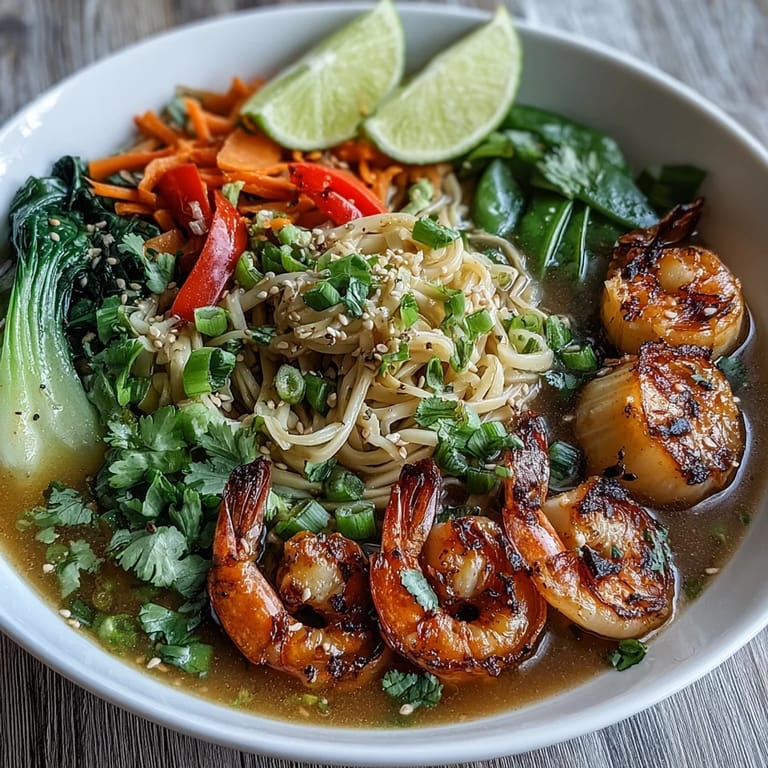
 There's something almost meditative about assembling an Asian noodle bowl, especially when the steam rises up and fogs your glasses right as you're plating. I discovered this particular combination while standing in my kitchen on a rainy Tuesday, staring at a delivery of live scallops and wondering if I could actually pull off something restaurant-worthy at home. The answer was yes, and it happened faster than I expected.
I made this for my neighbor who mentioned in passing that she missed eating seafood bowls from her favorite restaurant that closed down. Watching her face light up when I brought over a steaming bowl was worth every chopped vegetable and every minute of simmering. She asked for the recipe that same evening, and now it's become our standing dinner when we catch up.
Ingredients
- Large shrimp (200 g): Look for shrimp that are firm and smell clean; already peeled saves time, but deveining matters more than you'd think for texture.
- Sea scallops (200 g): Pat them completely dry before cooking or they'll steam instead of sear, and the difference is everything.
- Rice or soba noodles (200 g): Soba adds an earthiness, but rice noodles stay silkier if you're worried about overcooking them.
- Carrot, julienned: The knife work here is easier than it looks, and thin strips cook perfectly in the hot broth.
- Red bell pepper, thinly sliced: Red peppers are sweeter than other colors, which balances the umami beautifully.
- Snow peas (100 g): They stay crisp even after a few minutes in the broth, keeping the whole bowl from feeling mushy.
- Baby bok choy, halved: The mild bitterness grounds all the other flavors without overpowering anything.
- Spring onions, sliced: Save these for the very end; raw spring onions add a brightness that cooked ones can't quite achieve.
- Fresh ginger (1 tablespoon, grated): Grate it fresh right over the pan so you catch all those oils that make the aroma incredible.
- Garlic cloves, minced (2): Mincing by hand takes thirty seconds and gives you better control over the size.
- Low-sodium broth (1 liter): Low-sodium lets you taste everything else; you're building the saltiness with soy sauce and fish sauce anyway.
- Soy sauce (2 tablespoons): Use tamari if you need gluten-free, and taste as you go because brands vary wildly in saltiness.
- Fish sauce (1 tablespoon): It smells funky in the bottle but transforms into pure savory depth once it's simmering.
- Sesame oil (1 tablespoon): A little goes a long way; toasted sesame oil has more flavor than regular, so be generous with your nose when you're sniffing the bottle.
- Rice vinegar (1 tablespoon): The acidity brightens everything and keeps the broth from tasting flat.
- Chili paste (1 teaspoon, optional): Start with less and add more; heat builds as the bowl sits.
- Fresh cilantro, toasted sesame seeds, lime wedges: These three things are what make people ask for the recipe before they've even finished eating.
Tired of Takeout? 🥡
Get 10 meals you can make faster than delivery arrives. Seriously.
One email. No spam. Unsubscribe anytime.
Instructions
- Get your noodles ready:
- Cook according to the package and drain them right away so they don't get gummy. A cold water rinse helps them separate and stay from clumping together.
- Wake up the aromatics:
- Heat sesame oil in your large pot and add the ginger and garlic, listening for that immediate fragrance to tell you it's working. You'll know it's right when your whole kitchen smells like it should.
- Build the broth base:
- Pour in the broth, soy sauce, fish sauce, and rice vinegar all at once. The broth will smell suddenly deeper and more complex, like everything clicked into place.
- Let it simmer gently:
- Bring everything to a gentle simmer, not a rolling boil; you're coaxing flavors together, not driving them away.
- Add the vegetables first:
- Carrots, bell pepper, snow peas, and bok choy go in now and cook for about 3 to 4 minutes. They should still have a bit of snap when you taste one.
- Add the seafood with care:
- Shrimp and scallops need only 2 to 3 minutes in the simmering broth. The moment they turn opaque, they're done; overcooking turns them into tiny rubber bands.
- Taste and adjust:
- Add chili paste if you want heat, or another splash of soy sauce if it needs more depth. This is your moment to make it exactly right.
- Compose your bowls:
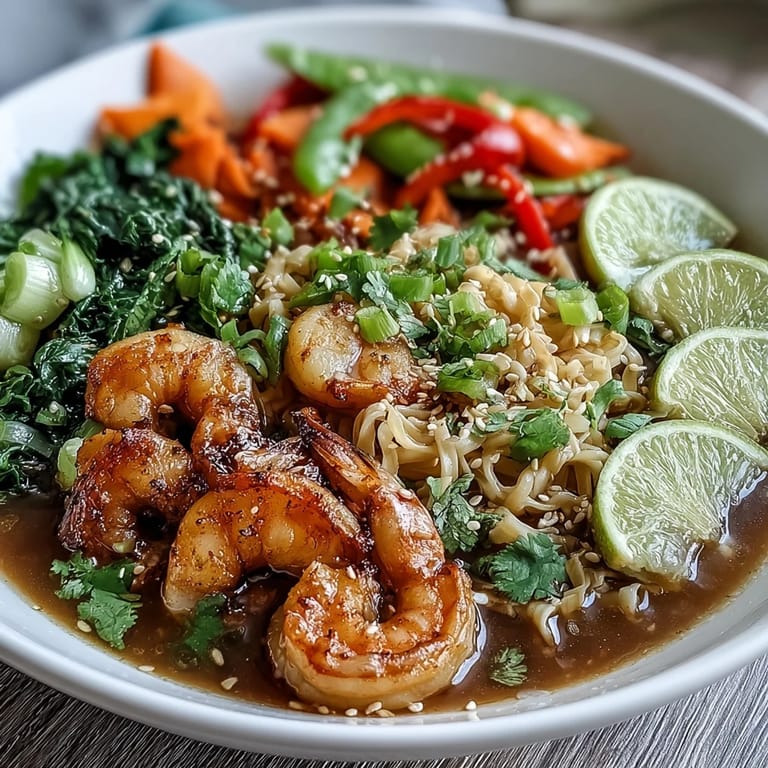
- Divide the noodles among four bowls and ladle the hot broth, seafood, and vegetables over the top. The heat from the broth warms the noodles and brings everything together.
- Finish with the toppings:
- Spring onions, cilantro, sesame seeds, and a squeeze of lime are not decorations; they're the final flavor notes that complete the whole picture.
 Merken
 My partner came home one evening just as I was ladling the final bowl, and the smell alone made them stop in their tracks. We ended up eating in comfortable silence for the first few minutes, both of us too absorbed in the flavors to talk, and that's when I knew this recipe was something special.
Why This Bowl Works
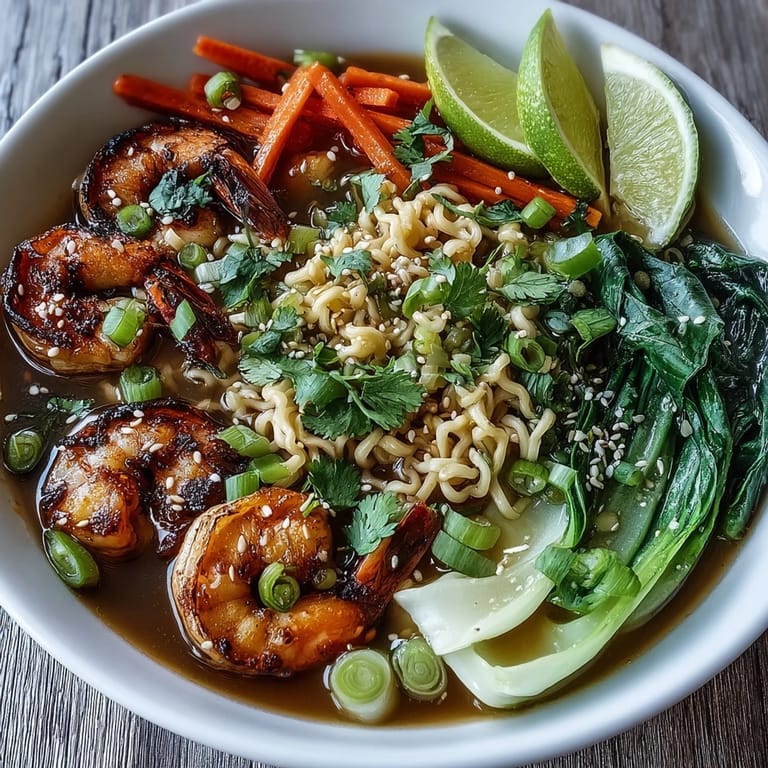
The magic here is in the balance between the delicate seafood and the assertive broth. Shrimp and scallops cook so quickly that they stay impossibly tender, while the vegetables soften just enough to absorb the flavors without losing their character. The noodles act as a buffer, soaking up all that aromatic liquid and creating a complete meal in every spoonful.
Building Flavor Layers
Each ingredient has a reason for being there, and the order matters more than you'd think. Ginger and garlic bloom in hot oil first, releasing their oils and setting the stage for everything that follows. The broth and its seasonings create a foundation that gets deeper as it simmers, and then the seafood and vegetables add texture and substance without muddying those carefully built flavors.
Making It Your Own
This recipe is flexible enough to accommodate what you have on hand or what you're craving that day. I've swapped in mushrooms, baby corn, or even thin slices of cabbage when I was short on other vegetables. The core technique stays the same: build your broth, keep the cooking time short, and finish with something bright and fresh.
- Try adding a splash of coconut milk to the broth if you want it richer and slightly sweeter.
- Substitute tofu for the seafood if you're cooking vegetarian, and add it toward the end so it doesn't fall apart.
- Egg noodles or udon work beautifully here if you prefer a chewier noodle than rice or soba.
 Merken
 This noodle bowl has become my answer to the question of what to make when I want to feel like I've accomplished something in the kitchen without spending hours there. It's honest food that tastes like care, and that's really all that matters.
Fragen & Antworten zum Rezept
- → Welche Nudelsorten eignen sich am besten?
Reisnudeln oder Soba-Nudeln passen hervorragend. Alternativ können Udon- oder Eiernudeln verwendet werden, je nach Verfügbarkeit und persönlichem Geschmack.
- → Kann ich das Gericht vegetarisch zubereiten?
Ja, ersetzen Sie einfach die Meeresfrüchte durch festen Tofu und verwenden Sie eine vegetarische Brühe. Der Geschmack bleibt dennoch aromatisch und würzig.
- → Wie vermeide ich überkochte Meeresfrüchte?
Geben Sie Garnelen und Jakobsmuscheln erst zum Schluss in die kochende Brühe. Nach 2-3 Minuten sollten sie bereits undurchsichtig und gar sein. Längeres Kochen macht sie zäh.
- → Ist das Gericht scharf?
Die Basis ist mild bis würzig. Die Schärfe können Sie mit Chilipaste individuell anpassen oder komplett weglassen, wenn Sie empfindlich auf Schärfe reagieren.
- → Welches Getränk passt dazu?
Ein kühler Riesling oder ein leichtes Lagerbier ergänzen die Aromen perfekt. Auch ein grüner Tee oder ein spritziger Wasser passen hervorragend.
- → Kann ich Reste aufbewahren?
Ja, Reste lassen sich im Kühlschrank bis zu zwei Tage aufbewahren. Erhitzen Sie sie vorsichtig, damit die Nudeln nicht zu weich werden.